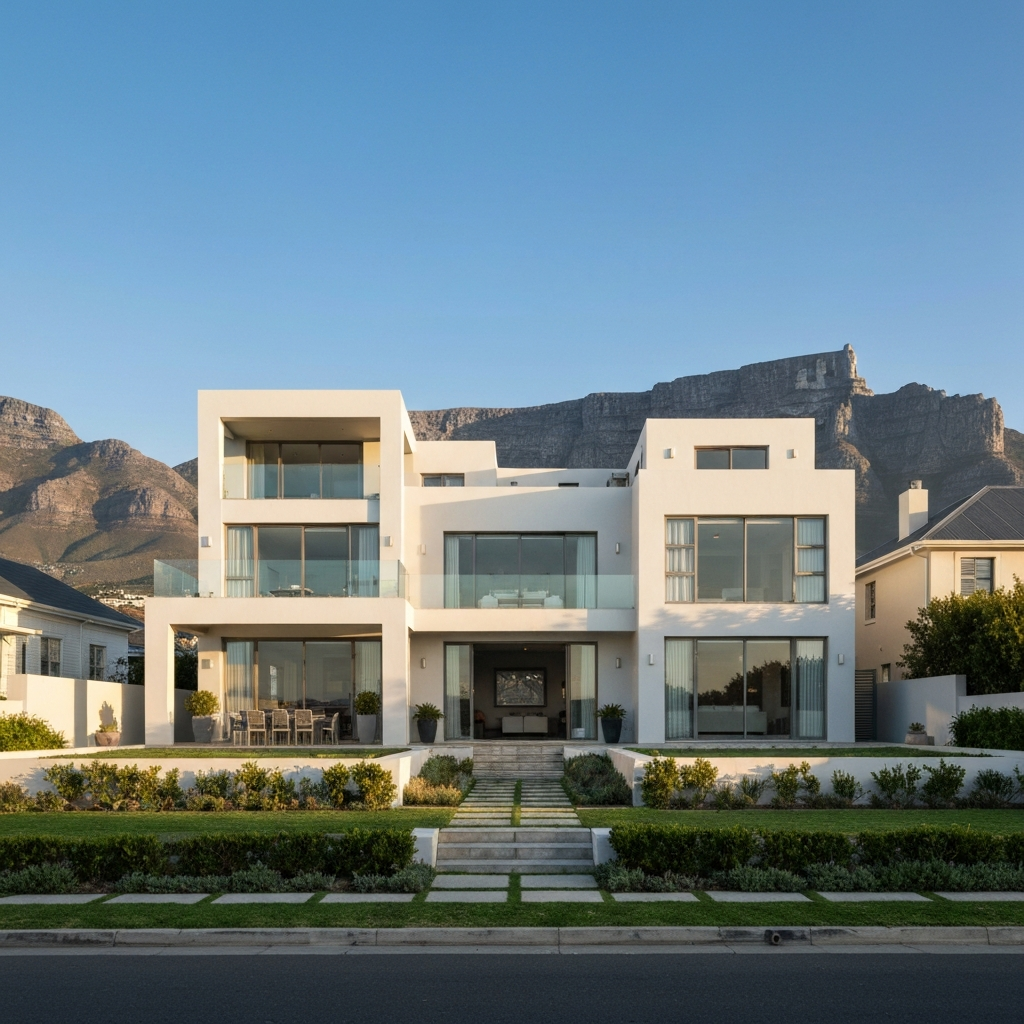
You determine your house’s worth by analysing data from multiple sources, not a single online tool. A property’s market value is what a buyer is willing to pay, which is established by comparing it to recent, comparable sales in your specific suburb.
This requires a data-driven approach that weighs factors like location, size, and condition against the current economic climate. The most reliable method is a Comparative Market Analysis (CMA), which provides a data-backed estimate based on real market activity.
Methods for Determining Your Cape Town Property Value
Accurately determining a property’s value requires understanding various methodologies that range from high level data processing to detailed physical inspections. Each approach serves a specific function depending on whether you need a quick estimate or a legally recognized appraisal:
- Automated Valuation Models: These algorithms process large datasets from deeds office records to provide a fast, probable value based on historical sales trends.
- Professional Valuations: Conducted by registered experts, these involve physical inspections to account for specific variables like recent renovations and unique architectural features.
- Comparative Market Analysis: Estate agents use this method to benchmark your home against active listings and recently sold properties in your immediate micro market.
- Financial and Legal Appraisals: These are standardized reports required by banks for mortgage approvals to ensure the asset value covers the loan amount.
Selecting the appropriate valuation model ensures you have a realistic expectation of your property’s worth whether you are preparing for a sale or securing finance.
Online Valuation Tools vs. Professional Appraisals
Free online valuation tools offer a convenient starting point but often carry a 10% to 20% margin of error. Their automated algorithms struggle with the nuances of Cape Town’s micro-markets, frequently failing to account for how a specific location; like Sea Point versus Parow; drastically impacts a property’s true value.
Conversely, a professional appraisal by an SACPVP-registered valuer provides a highly accurate, legally recognized report required to secure bank mortgages. Costing between R3,500 and R6,500, this comprehensive process relies on physical inspection and standardized methods to deliver a level of precision that automated tools simply cannot replicate.
Understanding Municipal Valuation vs. Market Value in the Western Cape
A common point of confusion for homeowners is the difference between the value assigned by the City of Cape Town and the price their property could achieve on the open market. These two figures are calculated for entirely different purposes and using different methodologies.
How Municipal Valuations Are Calculated
The City of Cape Town conducts a General Valuation at least once every four years to determine the rates you pay. This is a mass appraisal process using a Computer-Assisted Mass Appraisal (CAMA) system, which analyses sales data to value approximately 970,000 properties simultaneously. This valuation is used to calculate your municipal property rates and can influence other fixed municipal charges.
Market Value as the Deciding Factor
Market value is the price a willing buyer would pay for your property in the current market. It is influenced by supply and demand, interest rates, and broader economic conditions. Unlike the municipal roll, which is updated periodically, market value is fluid. This is the figure that a Comparative Market Analysis aims to determine for the purpose of a sale.
Key Factors Influencing Property Prices in Cape Town Neighborhoods
While location remains the most significant driver of property value, a combination of local factors determines the specific price hierarchies within each Cape Town neighbourhood. These diverse inputs create a unique value profile for different suburbs based on their specific utility and lifestyle appeal:
- Proximity to Amenities: Closeness to reputable schools, premier shopping centres, and quality medical facilities consistently has a positive impact on property value.
- Infrastructure and Connectivity: Seamless access to major transport corridors and public networks like MyCiTi bus routes can command significant price premiums.
- Lifestyle and Scarcity: The inherent appeal of beaches and mountain views, coupled with geographical limits on new development, creates a high scarcity premium in coastal areas.
- Semigration Trends: A steady influx of buyers from other provinces, especially those working remotely, continues to increase demand and drive price growth across the city.
- Safety and Security: High demand for secure living environments and gated estates remains a primary influence on property desirability and long term price stability.
By understanding these neighbourhood specific drivers, investors and homeowners can better predict which properties will offer the strongest resilience and growth in the local market.
The Role of a Comparative Market Analysis (CMA)
A Comparative Market Analysis (CMA) is the most effective tool an estate agent uses to estimate a property’s likely selling price by providing a realistic strategy based on hyper-local, recent data. This detailed report moves beyond generic algorithms by analyzing three critical data sets: recently sold properties, active listings, and expired listings.
While recent sales indicate what buyers are currently willing to pay for similar homes, active listings represent your direct competition and expired listings highlight price points the market has previously rejected. By considering factors like square meterage, condition, and specific features, a CMA accurately positions your property to ensure a competitive and successful sale.
How to Increase Your Home’s Value Before Selling
Strategic improvements can significantly increase your property’s market value by prioritizing functionality and broad appeal over personal taste. Focus on these high return updates to maximize your investment:
- Kitchen and Bathroom Refreshes: Modernizing these spaces with new fixtures or resurfaced countertops offers a strong return and high buyer influence.
- Curb Appeal: Enhancing the property’s exterior through landscaping and a fresh coat of paint ensures a critical first impression.
- Efficiency Upgrades: Installing energy and water saving features like LED lighting or gas stoves provides a major selling point in the local market.
- Enhanced Security: Professionally installed cameras and alarm systems are essential drawcards that increase perceived property value.
By focusing on these specific areas, you can ensure your home stands out to potential buyers and commands a higher selling price.
Current Property Market Trends in Cape Town
The Cape Town property market has shown robust growth and continues to outperform the national average, a trend driven by persistent demand from semigration and unique geographical constraints that limit the supply of new housing. Over the past year, residential property prices increased by an estimated 7% to 9%, with freehold houses generally achieving gains at the higher end of this range.
Suburbs such as Woodstock, Salt River, and Observatory have emerged as high growth areas by attracting a steady influx of young professionals and investors. Looking ahead, market forecasters project an average annual appreciation rate of approximately 5% to 7% over the next five years, provided economic conditions remain stable, while the Atlantic Seaboard is expected to maintain its status as a premium market defined by selective buyer demand.
FAQs
How much does a professional property valuation cost in Cape Town?
A professional valuation for a residential property in Cape Town typically costs between R3,500 and R6,500. The final fee depends on the property’s size, complexity, and location.
Is an online property valuation accurate?
Online valuations are a useful starting point but can be inaccurate by 10-20%. They use algorithms based on historical sales data and cannot account for a property’s unique condition, renovations, or specific micro-market trends.
What is the difference between market value and replacement value?
Market value is the price a property is likely to sell for in the current market. Replacement value is the total cost to rebuild the property to its original state if it were destroyed, which is used for insurance purposes and excludes the value of the land.
How does the Cape Town municipal valuation affect my rates?
The City of Cape Town uses its General Valuation Roll to calculate your property rates. A higher municipal valuation generally results in a higher rates bill, as your rates are determined by multiplying your property’s municipal value by the “rate-in-the-rand” set by the City.