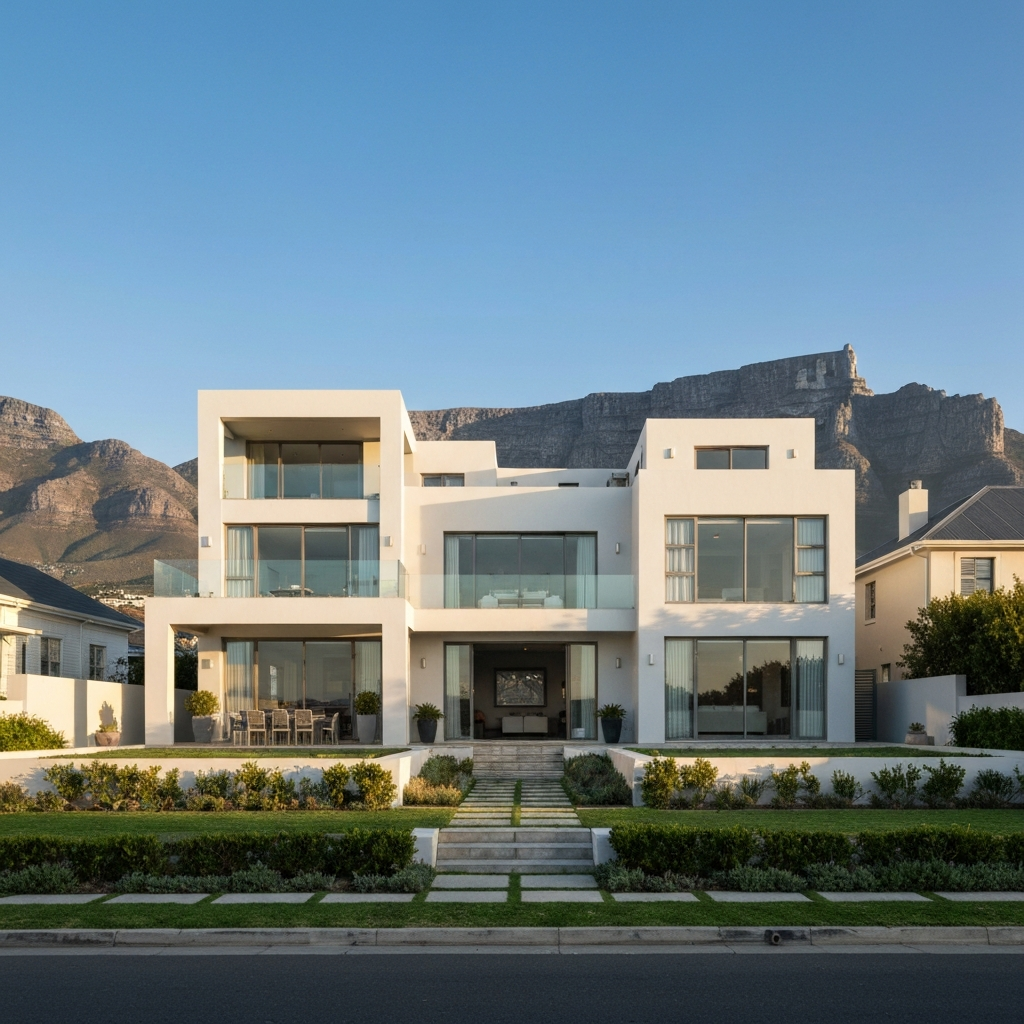
Deciding between freehold and sectional title is the fundamental starting point for any property investment in Cape Town. Freehold gives you exclusive ownership of the land and the structures on it, while sectional title grants ownership of a unit within a larger complex and a share of the common property.
The better investment depends entirely on your financial structure, appetite for administrative responsibility, and long-term capital growth versus rental yield strategy. The bottom line is that your choice dictates your control, monthly costs, and potential returns.
Understanding the Core Differences: Full Title vs. Sectional Title
A freehold, or full title, property means you own the land and every structure on it, with your rights registered at the Deeds Office. You are solely responsible for all maintenance, insurance, and security.
Conversely, sectional title ownership involves owning a specific “section” (e.g., an apartment or townhouse) and an undivided share of the “common property,” which includes shared amenities like gardens, pools, and driveways. This structure automatically makes you a member of the scheme’s Body Corporate, which manages the common property.
Financial Implications: Levies, Rates, and Maintenance Costs
The financial mechanics of these ownership types differ significantly based on how maintenance and municipal obligations are managed. Investors must weigh the autonomy of standalone ownership against the shared responsibilities of a collective scheme:
- Freehold: Owners are directly responsible for all municipal rates and taxes for services like water and refuse collection as well as all maintenance costs which can be unpredictable and require diligent budgeting.
- Sectional Title: Owners pay a monthly levy to the Body Corporate that covers the upkeep of common areas, building insurance, and security while often contributing to a reserve fund for future major repairs.
While sectional title levies simplify budgeting by consolidating costs, they can be substantial and are prone to annual increases that must be factored into your long-term yield projections. Choosing the right structure depends on your capacity for hands-on management and your preference for either fixed monthly costs or direct control over property expenditures.
Security and Lifestyle: The “Lock-Up-and-Go” Appeal
Sectional title schemes typically offer integrated security systems, access control, and guards, which are funded through levies. This creates a “lock-up-and-go” lifestyle that appeals to young professionals, investors, and frequent travellers. Freehold properties place the entire security burden, from perimeter fencing to armed response contracts on the owner, representing a significant and ongoing cost.
Rules and Regulations: The Role of the Body Corporate vs. Individual Control
Freehold ownership provides maximum autonomy; you can renovate or alter your property as you see fit, subject only to municipal by-laws. Sectional title living is more restrictive. The Body
Corporate enforces conduct rules that can dictate everything from pet ownership to external aesthetics. Any renovations to your unit, especially externally, require Body Corporate approval, a process designed to maintain a uniform appearance across the scheme.
Pros and Cons of Freehold Ownership in Cape Town
Freehold ownership in Cape Town offers a specific balance of operational freedom and financial commitment, making it an attractive option for investors focused on long-term equity and direct asset management.
- Complete Autonomy: Owners enjoy total control over property modifications and management, bypassing the need for committee approvals or governing body consultations.
- Greater Potential for Capital Growth: Due to the ownership of the underlying land, these properties historically appreciate at a higher rate than sectional titles.
- Space and Privacy: Freehold stands are typically larger, offering superior privacy and the flexibility for future structural expansions or landscaping.
- Full Responsibility for Costs: The owner is solely responsible for all maintenance, security, and insurance, which can result in significant and sometimes unpredictable outlays.
- Higher Purchase Price: This ownership model generally requires a larger initial capital investment compared to the more accessible entry points of sectional title units.
By carefully weighing these factors, you can determine if the benefits of autonomy and growth potential outweigh the demands of increased responsibility and higher upfront costs.
The Benefits and Drawbacks of Sectional Title Property
Sectional title properties often serve as the entry point into the Cape Town property market, offering a blend of affordability and convenience. However, owning a unit within a shared scheme involves a unique set of financial and legal structures compared to full-title ownership.
The Benefits of Sectional Title Ownership
For many buyers, the appeal of sectional title living lies in the reduction of individual responsibility and the pooling of resources:
- Financial Accessibility: These units are typically more affordable to purchase than freestanding homes, making them a primary choice for first-time buyers and buy-to-let investors.
- Collective Maintenance: The Body Corporate manages the upkeep of the building’s exterior and all common areas. These costs are shared among owners and funded through monthly levies, removing the burden of hands-on maintenance.
- Standardized Security: Most schemes provide robust security features, such as perimeter fencing, CCTV, or manned access control, as part of the standard levy.
Key Considerations and Constraints
While convenient, shared ownership requires a degree of compromise regarding personal freedom and financial control:
- Regulatory Restrictions: Conduct and management rules can limit your autonomy concerning pet ownership, structural renovations, and the general use of your property.
- Financial Obligations: Monthly levies can be significant and are subject to annual increases. Additionally, owners may be liable for “special levies” to fund unexpected large-scale projects or major repairs.
- Collective Decision-Making: All significant decisions regarding the complex are made by the Body Corporate. This democratic process can sometimes lead to delays or disagreements between owners regarding how the scheme is managed.
Understanding these dynamics is essential for any buyer looking to invest in a sectional title scheme, as the health of the Body Corporate directly impacts both your lifestyle and your property’s future resale value.
Cape Town Market Trends 2025-2026: Where is the Growth?
The Western Cape’s property market continues to outperform other regions in South Africa, with house prices showing robust growth. Recent data indicates a significant trend favouring sectional title properties, with their price inflation exceeding that of freehold homes for the first time in two decades towards the end of 2023. This shift is driven by affordability, semigration, and a strong demand for investment properties with good rental yields.
High-Demand Areas for Sectional Title
The demand for sectional title units is particularly strong in central, high-density areas that offer convenience and a vibrant lifestyle. In prime locations like the City Bowl and Atlantic Seaboard, sectional titles account for approximately 76% of units sold, with a fast-paced market buoyed by local, up country, and international buyers.
Similarly, areas such as Century City, Observatory, and Woodstock attract young professionals and investors due to their proximity to work hubs and modern amenities. These suburbs offer a range of contemporary developments and deliver some of the city’s highest rental yields, which can reach up to 10% in student hubs like Observatory.
Top Cape Town Suburbs for Freehold Family Homes
Families and long-term buyers seeking space and independence continue to drive demand for freehold properties in established suburbs, prioritizing privacy and lifestyle. In areas like Durbanville and Somerset West, spacious family homes offer a perception of better value relative to more central locations, attracting those looking for more square footage.
Meanwhile, the Southern Suburbs, including Constantia, Claremont, and Newlands, remain highly popular for their expansive properties, proximity to excellent schools, and abundant green spaces, solidifying their status as prime locations for high end family living.
Conclusion: How to Choose Based on Your Lifestyle and Budget
The decision rests on a technical assessment of your priorities. If your primary goal is long-term capital growth and you require full control over your property, a freehold home is the logical choice, provided you can manage the higher costs and maintenance responsibilities.
If you prioritise affordability, security, and a low-maintenance lifestyle, or are seeking a buy-to-let investment with strong rental yields, a sectional title property is the more strategic option. Both ownership models present viable investment paths within Cape Town’s resilient market.
FAQs
What is the main difference between freehold and sectional title?
Freehold ownership grants you exclusive title to a property and the land it stands on. Sectional title ownership means you own a specific unit or “section” within a complex and share ownership of the common property with other owners.
What do monthly levies typically cover in a sectional title scheme?
Monthly levies cover the costs of managing and maintaining the common property. This includes building insurance, security services, maintenance of gardens and pools, administrative fees, and contributions to a reserve fund for future capital projects.
Is it cheaper to own a freehold or a sectional title property in Cape Town?
Initially, sectional title properties are generally more affordable to purchase than freehold homes. However, the ongoing monthly costs of sectional title ownership (levies and rates) must be compared to the total costs of freehold ownership (rates, insurance, security, and all maintenance), which can be higher and less predictable.
Can I renovate my property if it is a sectional title?
Interior renovations are generally permissible, but any external changes or alterations that affect the structure or appearance of the building require permission from the Body Corporate. This is to ensure the scheme maintains a uniform and aesthetically pleasing standard.